Ccaccaccollo is an indigenous community located in the Andean highlands of Cusco. There are roughly 140 families living in the community – in most cases their first language being quechua. The inhabitants maintain many traditional practices and many are dedicated to farming. The Women’s Weavers Association of Ccaccaccollo was founded in order to help preserve some of the community’s rich cultural heritage. Indeed, thanks to the dedication of this organization some of the traditions which had been lost in recent generations have been recovered.
Despite the fact that hundreds of thousands of tourists visit Cusco and Machu Picchu each year very few of the rural communities in the vicinity, such as Ccaccaccollo, benefit from this tourism. As is the case in many communities’ worldwide women in Ccaccaccollo are often excluded from educational and economic opportunities. As a result, it is important to identify solutions so that these women are empowered and able to maintain themselves and their families.
Our tour company in association with the community of Ccaccaccollo has helped to found the Women’s weavers cooperative with the objective of creating economic opportunities for them. We have helped this cooperative with training programs and with installations and equipment. New production methods have been introduced at the same time as promoting the traditional weaving techniques with llama and alpaca wool – these approaches aim to attract more visitors to the community.
The Impact of Tourism
Over 80 people are now part of the cooperative. They are constantly learning new designs and styles for the weavings, whilst also continuing to incorporate traditional practices to produce textiles made from llama and alpaca wool.
Additionally:
• The members of the cooperative have been able to contribute to their family’s income.
• The women who have been part of this project since the beginning have indicated that all of their children have been able to go to university.
• Members of the association form the first generation completely literate in Spanish.
• The community has been using the benefits of tourism to prioritize the protection and conservation of its natural and cultural resources and to help share, develop and maintain its traditions.
• Owing to the success of the cooperative a community family home has been opened.
The tour we offer is called “Epic Peru”. During your visit to the community you will be able to see the project and learn about the weaving techniques and natural dyes used to create these traditional garments. You will also have the chance to buy textiles directly from the women who made them – thus ensuring that your purchase has a direct impact.
Typical Clothing Worn by the Women
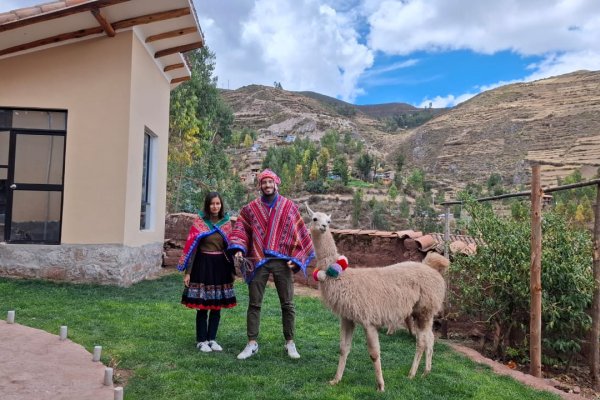
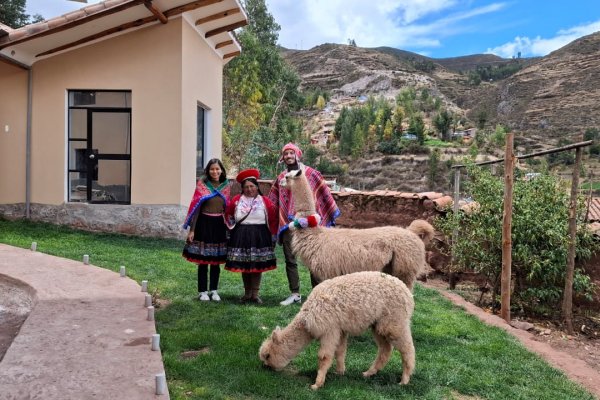
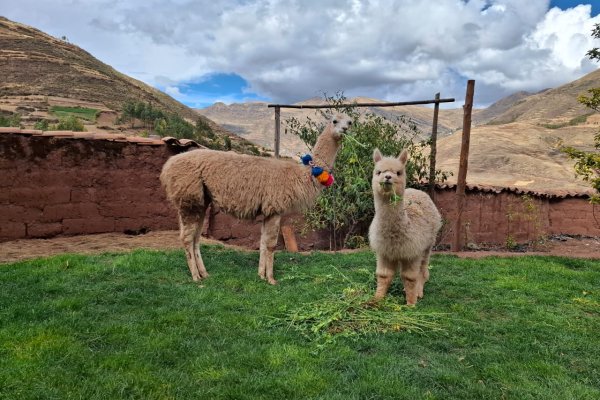
The weavers traditionally use red and white hats, normally have braided black hair and dress with red tops and dark colored skirts with intricate patterns. They tend to sit on the grass to weave, often close to groups of alpacas.
Rural Participative Tourism
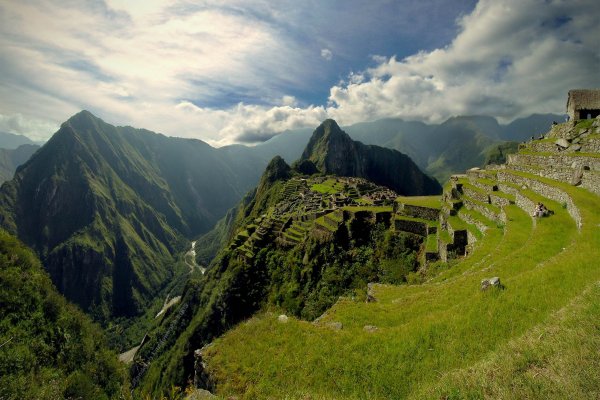
In general, when visitors imagine travelling to this part of Peru, they will likely be thinking about exploring the remains of the great civilizations still visible in the mountains and valleys. You may well try to imagine how people lived here in the rugged terrain before the arrival of the Europeans and the subsequent conquest of the native cultures.
What many people do not appreciate is that many aspects of the Inca and pre-Inca culture are still very much alive today. As an example, here are some words from a local farmer working the fields today:
“We can see the stars and the moon through the eyes of the llamas and thus we can make good decisions over when it is best to sow and harvest our crops and also to decide whether we should plant potatoes, maize or other Andean cereal crops. For this reason, we consider the eyes of the llamas to be an important part of our religion”.
In some ways we could say that the inhabitants of Ccaccaccollo have been conserving much of their cultural heritage but that until now they have not been able to integrate these customs in the modern world. The project allows for this integration to take place without the need to sacrifice any of their traditions.
By travelling with us you will be able to visit places which are not common tourist destinations and to take part in some of the daily activities of the community such as helping to build or repair homes using adobe (mud) bricks. You will be able to experience an Andean dawn and you can accompany your host family to the fields to helps with agricultural activities as well as learning about the crops and the agricultural cycle.
During your trip you will learn about the consequences of excessive levels of tourism to certain sites in addition to experiencing the traditions of the quechua way of life and witnessing Andean agricultural practices. You will also be able to hear some of the fascinating fables and tales from local oral history.
So, are you ready to explore Peru? Would you like to learn more about the country and to get to know the quechua speaking women? If so, then please contact us and we would be privileged to help organize an itinerary for you or for your school.
The Women’s Weavers Project
Manu Rainforest Peru has been working with the community of Ccaccaccollo to help them with the production of woven garments with an orientation towards the tourist industry.
Below are some comments on the process of weaving:
1. Wool washing. For proper dyeing, ammonia and natural alkaline modifiers are used to effectively degrease and bleach sheep or alpaca wool. Saqta is known locally as INKA Shampoo, which is a natural and ecological detergent.
2. The mordanting process. To ensure the dye's fixation, natural products containing alumina and potassium sulfates are used. These not only serve to fix the dye, but also influence the intensity of the colors.
3. The process of dying the wool. Natural dyes are used derived from seeds, flowers and roots from different plants – generally wild growing ones. Cochineal is also used (derived from beetles which live on the tuna cactus).
4. Once the skein of wool has been dyed it is washed repeatedly until the water is clear. It is then left to dry in the shade.
5. The pusca is a hand held spinning wheel used for spinning wool using only the fingers.
6. The balls of wool are set up in crossed patterns for easy use.
7. The weaving is made on a traditional style loom where the designs, patterns and colors will be applied.
Products on Sale:
Once the weavings have been completed, they are placed on sale. There are an array of products and designs ranging from small wallets to large blankets. This variety of handicrafts on display often encourages the visitors to ask to visit the artisan’s homes.
Learn to Weave
A stay in this community is a unique and highly recommended intercultural experience. In addition to learning about the community, you can relax and enjoy the tranquility and nature surrounding this district. The weavings and the use of natural dyes are examples of the excellent achievements of pre-Hispanic Andean civilizations. You will have a chance to learn these traditional methods in these highly entertaining and educational workshops.
Agriculture
The majority of the families in Ccaccaccollo are farmers. They grow a variety of Andean crops generally using ancestral practices and tools. Traditional forms of shared labor such as the ayni and the minka are still used where groups of families help each other with their agricultural tasks in a reciprocal manner. Farming is the principal economic activity. 90% of the farmers will be growing a mix of potatoes, other Andean tubercular crops and cereals. Livestock farming is also practiced. The principal animals are cows, sheep and llamas. Bulls are commonly used for ploughing.
Important Information
The Community of Ccaccaccollo is situated at 3,600 meters above sea level on the “Sacred Valley of the Incas” route. It is located within the district of Taray, province of Calca, department of Cusco at a distance of 30km from the city of Cusco.
How to Reach Ccaccaccollo
There are three alternatives for reaching the community. The first and easiest option is to use a travel agency and go on their vehicle. The second option is to hire private transport (taxi) which will take you directly to the village. Alternatively, you can take a bus from Cusco which is heading for Pisaq or Calca and get off at either the Pincheq or Ccochawasi bus stops – 30 Km from Cusco along the road to Pisaq. The journey time should be about 40 minutes. From either bus stop you then head left off the main road to walk for about 15 minutes along an unpaved road until you reach the community of Ccaccaccollo. During the walk you would be able to observe the magnificent countryside and would have a chance to see some of the local bird species and also some of the crops being cultivated by the local farmers.
Reception in Ccaccaccollo
Upon arrival in the Community of Ccaccaccollo you will be met by a group of women who will happily provide a demonstration of their weavings. These women continue to observe customs and traditions taught by their ancestors. They learned to weave thanks to their mothers and grandparents and continue to pass on their knowledge to their children today. They will provide a demonstration of how they spin and weave the wool. They will also show you the different dyes they obtain from a variety of native wild growing plants.
Why Visit Ccaccaccollo?
Rural Participative Tourism allows us to have direct contact with the families in the community of Ccaccaccollo. The families are more than happy to show you their customs and traditions. They will share their knowledge relating to their daily activities such as weaving, cooking and agriculture. Depending upon the time of year you will be able to observe and participate in different agricultural activities, such as ploughing, tilling, sowing, weeding, irrigating and harvesting of crops such as maize, quinoa, potatoes, oca, olluco, beans, peas, barley, wheat and mixed vegetables. You will also be able to observe and participate in activities relating to animal husbandry such as feeding and shepherding for animals such as cattle, llamas, alpacas and sheep
Apu Pukara
Apu’s are high peaks which are considered as Deities in many Andean communities. Apu Pukara is the highest peak close to the community of Ccaccaccollo at 3,900m and thus is considered to be the most important of the deities, which overseas the care of the community and its members. It also commands a panoramic view of the “Sacred Valley of the Incas” below. On the slopes of the hill there are some striking natural landscapes where you can observe Andean birds and plants (including herbs and medicinal plants). You will also be able to see the agricultural practices of several nearby communities.
Gastronomy
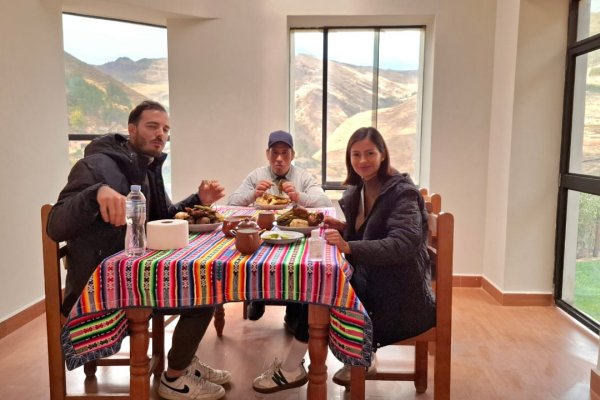
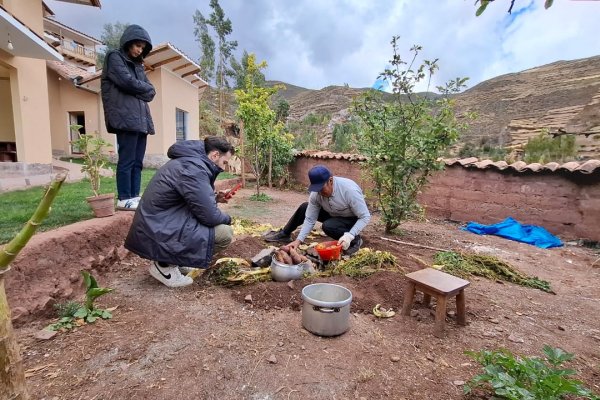
Learning about and tasting the local gastronomy is another of the experiences you will have whilst visiting the community. There will be opportunities to try some of the typical dishes of the Cusco region such as huatia (produced in a temporary domed mud oven), puchero (a traditional soup dish made with a variety of meats and vegetables), oven baked guinea pig, fried trout and Chiriuchu (a mix of cooked meats, tortillas, maize and cheese – eaten cold).
Itinerary (1 day/1 night)
You will be picked up from your hotel in private tourist transport at 8 a.m. The journey to the community of Ccaccaccollo should take about 40 minutes. During the journey you will be able to enjoy the landscapes and also a number of communities which we shall pass through. Upon arrival we shall be met by a welcoming group of local women dressed in their typical brightly colored clothes.
Shortly after our arrival the women will provide a demonstration of each step of the traditional weaving process including how the wool is dyed and how finishing touches are applied. The women have retained the ancestral weaving techniques alive in order to produce many beautiful textiles such as blankets, shawls, scarves, table coverings and jumpers.
Following this demonstration, we shall go on a 2-hour hike to a look out point over the Sacred valley called “The Balcony”. This is located at 3,800m and provides excellent views over the valley below and also of majestic snow-capped mountains such as Chicon and Veronica.
We shall return to Ccaccaccollo in order to participate in a delicious lunch made from produce from the area. Lunch will be eaten together with some of the local families.
After lunch we shall observe and participate in agricultural activities such as ploughing, sowing and/or harvesting of crops such as maize, potatoes, broad beans, wheat, and quinoa. The exact nature of the activities will depend upon the time of year in which you visit.
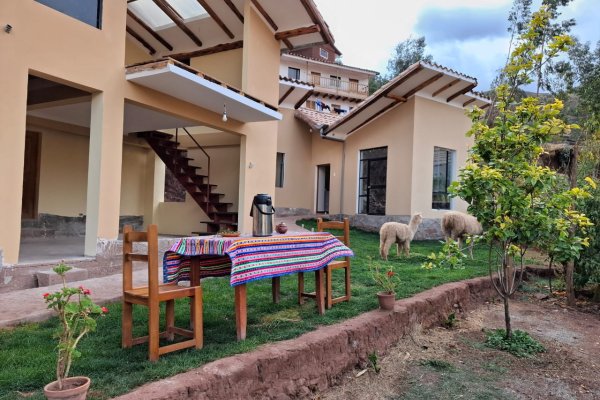
Finally, upon returning to the community you will be assigned lodgings in one of the family homes, where you will spend the night. The following morning you will have breakfast with the family before returning to Cusco.
The Price of the Service includes:
• Private Transport to and from the community
• A local guide
• 1 lunch, 1 dinner and 1 breakfast
• All demonstrations and visits within the community
• 1 night’s lodgings at a family
We provide tourism services based on "Responsible and Sustainable Tourism"