To book a tour to Sacred Valley from Cusco, you’ll need to reserve a guided day trip or private driver online, grab your Boleto Turístico pass, and map out key Inca sites like Pisac and Ollantaytambo. Machu Picchu Explorers handles all of it for you.
Did you know? According to the Rio Times, Foreign arrivals in Peru reached 3.6 million in 2025.
This shows that Peru has become a popular travel destination amongst travellers. Booking a trip to these ancient ruins also gives your body a gentler way to adjust to the altitude. The valley sits lower than Cusco and stays noticeably warmer. Along the way, you’ll come across massive Inca fortresses, colorful artisan markets, and river views that stop you.
Key Takeaways
- Sacre Valley tours with the right guides let you enjoy a stress-free journey, expert insights, and access to Inca heritage.
- In the Sacred Valley tour program, you will visit the major spots, like Pisac, Ollantaytambo, Moray, and Maras. You will also get the chance to visit traditional Andean villages.
- Visit during the dry season, as the sky is clear, the climate is just right for sightseeing, and also nice weather for a leisurely wander around ancient ruins.
- Wear clothing in layers, a decent pair of shoes, have an ample supply of water, and take cash with you so that you can be at your easiest while spending time in the mountains.
- A lower altitude in Sacred Valley enables tourists to adjust themselves slowly before ascending to Machu Picchu.
Why a Guided Tour to the Sacred Valley Is Essential
Trying to plan your own day-by-day trip around Cusco gets tricky fast without someone who actually knows the area. A Cusco to Sacred Valley day tour takes that headache off with simple transport between sites that are often spread further apart than they look on a map.
Good guides don’t just drive you around either. They’ll walk you through Inca astronomy, the logic behind those terraced farms, and stonecutting techniques that still puzzle engineers today. Here’s what organized tours give you that DIY planning usually doesn’t:
- Lower elevation: Valley towns sit around 9,200 feet, which makes altitude adjustment a lot easier on your body.
- Seamless logistics: Private buses take on the tricky mountain routes so you don’t have to.
- Cultural immersion: You get experience with indigenous weavers carrying on centuries-old traditions.
- Comprehensive entry passes: Most tour packages sort out your Boleto Turístico for you ahead of time.
Top Highlights Included in the Best Sacred Valley Tours in Peru
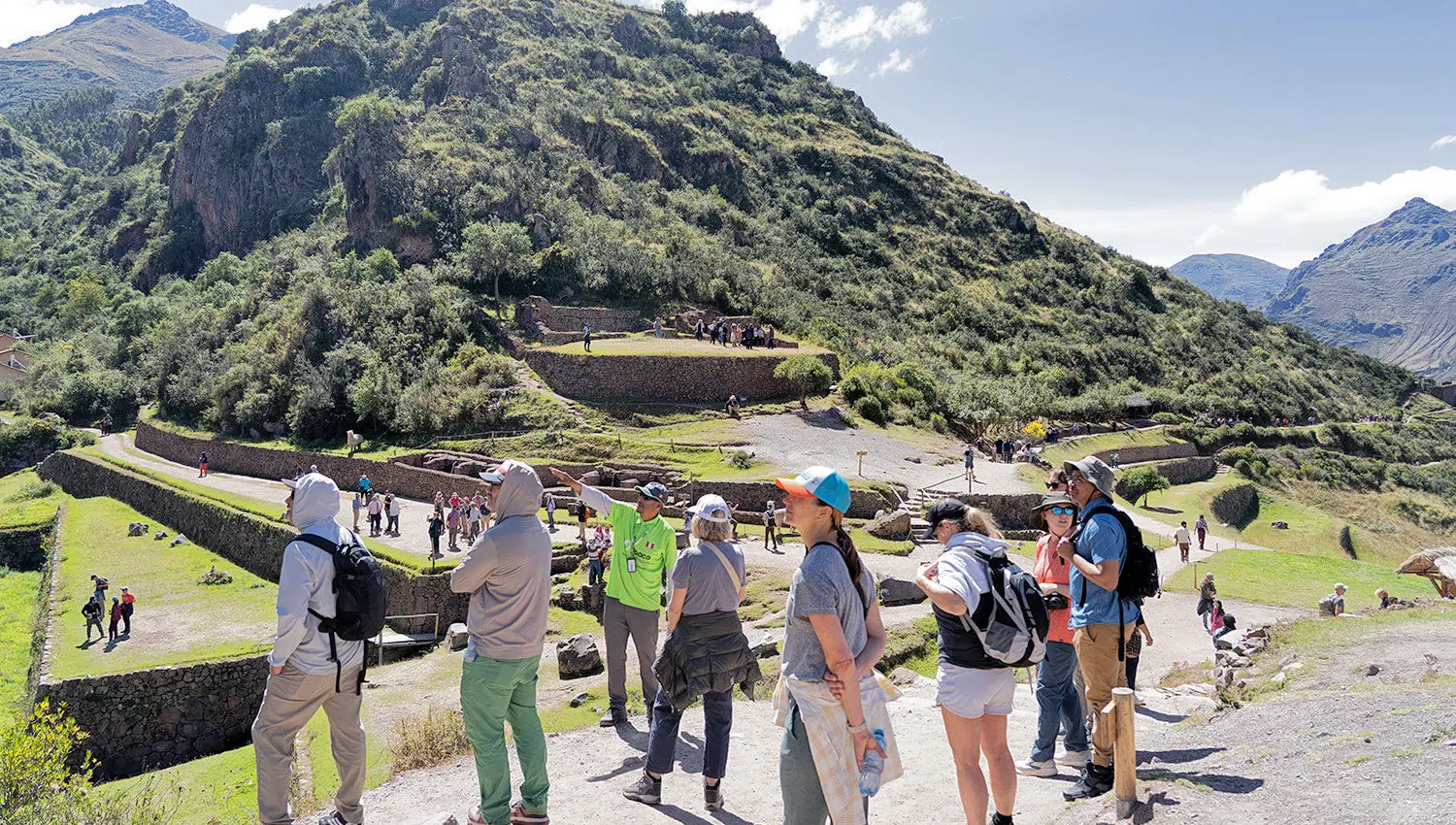
The best Sacred Valley tours in Peru cover a lot of ground, and there’s something here for pretty much every kind of traveler. Most full-day routes hit the major historical stops along the Urubamba River. Here’s what you can expect to see:
- Pisac Citadel and Market: Sprawling agricultural terraces climb the hillside above, showing off just how sharp Inca farming really was. Down in the market, stalls are packed with handmade alpaca sweaters and silver jewelry.
- Ollantaytambo Living Inca Town: Massive stone fortresses still guard this village today. It also doubles as the main train hub heading to Machu Picchu.
- Moray Concentric Terraces: These circular terraces once worked like an ancient agricultural lab, testing how crops handled different microclimates.
- Maras Salt Mines: Thousands of shimmering salt pools stretch across the canyon in a pattern that looks almost engineered. Local families still harvest the salt the traditional way, passed down through generations.
Exploring Traditional Villages in Sacred Valley
The traditional villages in Sacred Valley are where Andean culture really comes alive, and it’s still very much a living culture, not a museum piece. Chinchero is known for its weaving cooperatives run by Quechua women. Watching them dye fresh alpaca wool using plants and insects, the same way it’s been done for generations, is genuinely fascinating.
Wandering the cobblestone streets puts you right in the middle of everyday mountain life. Local eateries dish out hearty regional food, think fresh quinoa soup and warm roasted corn. And chatting with the artisans directly, even with a language gap, tends to be one of the most memorable parts of the whole trip.
Comparing Popular Itineraries and Travel Options
Which route makes sense for you really comes down to your budget and how many days you’ve got free. Some travelers stick to full-day group trips, while others go the private, custom route.
| Tour Type | Key Attractions | Ideal For | Typical Duration |
| Classic Day Route | Pisac Ruins, Market, Ollantaytambo Fortress | First-time visitors | 8 to 9 hours |
| Maras & Moray Express | Moray Terraces, Maras Salt Ponds, Chinchero | Photography enthusiasts | 5 to 6 hours |
| Two-Day Sacred Path | Pisac, Ollantaytambo, overnight stay, train connection | Trekkers & hikers | 2 days |
Best Time of Year to Book Your Excursion
The local weather really shapes how your whole trip feels. Dry season runs from May through October, and it delivers clear blue skies and crisp air, though early mornings can still catch you off guard with the cold. Daytime, though, is pretty pleasant.
Rainy season stretches from November through April. Showers tend to roll in during the late afternoon, so mornings usually stay clear enough for sightseeing. And honestly, the hills turn such a vivid green during this stretch that photographers often prefer it.
Essential Packing Tips for Mountain Day Trips
The weather up in the mountains can change quickly within a few hours, so packing right matters more than you’d think. Here’s what to toss in your daypack:
- Layered clothing: A thermal shirt, fleece jacket, and rain jacket cover you no matter what the sky does.
- Sun protection: The high-altitude sun is no joke, so bring heavy sunscreen, sunglasses, and a wide-brimmed hat.
- Hydration and snacks: A reusable water bottle and some energy bars go a long way on the longer walking stretches.
- Sturdy footwear: Comfortable hiking shoes give you the grip you need on those slick stone steps.
- Local currency: Keep Peruvian Soles in cash handy for market crafts and tips for your guide.
Start Your Unforgettable Peruvian Adventure Today!
Ready for a tour to the Sacred Valley and see this ancient history for yourself? Booking with Machu Picchu Explorers sets you up for a trip packed with real Inca history and zero guesswork. Visit our website to choose a trip package that fits what you’re actually looking for. Let a local guide show you around instead of figuring it out from a map.
FAQs
1. How many days should I spend in the Sacred Valley?
If you’re planning on visiting the main archaeological sites and not wanting the whole trip to feel like a race, then spend two full days there. Besides, it also gives your body time to acclimatize to the altitude.
2. Is the Sacred Valley lower than Cusco?
Yes, it sits at roughly 9,200 feet. Cusco is noticeably higher, at around 11,150 feet above sea level, which is part of why the valley feels easier on newcomers.
3. Do I need a guide to visit the Sacred Valley?
You can absolutely go it alone, but a local guide fills in a lot of the history and context you’d otherwise miss entirely.
4. Can I travel by train from Ollantaytambo to Machu Picchu?
Yes, in fact, the primary train that takes visitors to Aguas Calientes starts from the Ollantaytambo station there. That makes it an ideal place to depart.
5. Which ticket is required for archaeological sites in Sacred Valley?
The Boleto Turístico del Cusco should be your ticket of choice as it lets you in to Pisac, Ollantaytambo, Moray, and Chinchero via one pass.